
A well-planned kitchen is equal parts beauty and performance, creating a space that looks stunning and works hard every single day. Whether you’re tackling a full renovation or refining what you already have, the right layout determines how smoothly you prep, cook, entertain, and clean. Working with an experienced kitchen designer helps translate the way you live into a plan that maximizes flow, storage, and style. Here, we’ll break down the principles and practical guidelines that turn good kitchens into great ones, so your space feels effortless from the morning coffee rush to late-night hosting.
Efficiency isn’t an accident — it’s the result of hundreds of small decisions that add up to a kitchen that simply works. From traffic patterns and appliance placement to lighting, storage, and seating, each design choice influences comfort, safety, and the ease of daily use. Think of this guide as your roadmap to a layout that looks refined and functions intuitively, with ideas you can personalize for any footprint, from a compact galley to a generous open-concept plan.
The Modern “Work Triangle” (and Why Zones Matter)
Before you tackle cabinet or appliance finishes, step back and consider how you move through the room. The traditional work triangle — sink, cooktop, refrigerator — still offers a useful baseline, but today’s kitchens serve multiple roles. A zone-based approach aligns the room with real tasks and the people who share them. A few zones you might utilize in your everyday life may include:
- Prep zone: Between the sink and cooktop with generous counter space, a pull-out trash, knives, and cutting boards nearby.
- Cooking zone: Cooktop, wall ovens, ventilation, spices, oils, and heat-resistant landing areas.
- Clean-up zone: Main sink, dishwasher, drying space, and storage for daily-use dishes and glassware.
- Snack/beverage zone: Refrigerator drawers, an undercounter fridge, ice maker, or coffee bar to keep traffic out of the main prep lane.
Considering these zones in your kitchen design layout ensures that you have everything you need to support your culinary experience and bring your ideal design visions to life, without sacrificing necessary equipment or areas.
Right-Size Your Aisles and Clearances
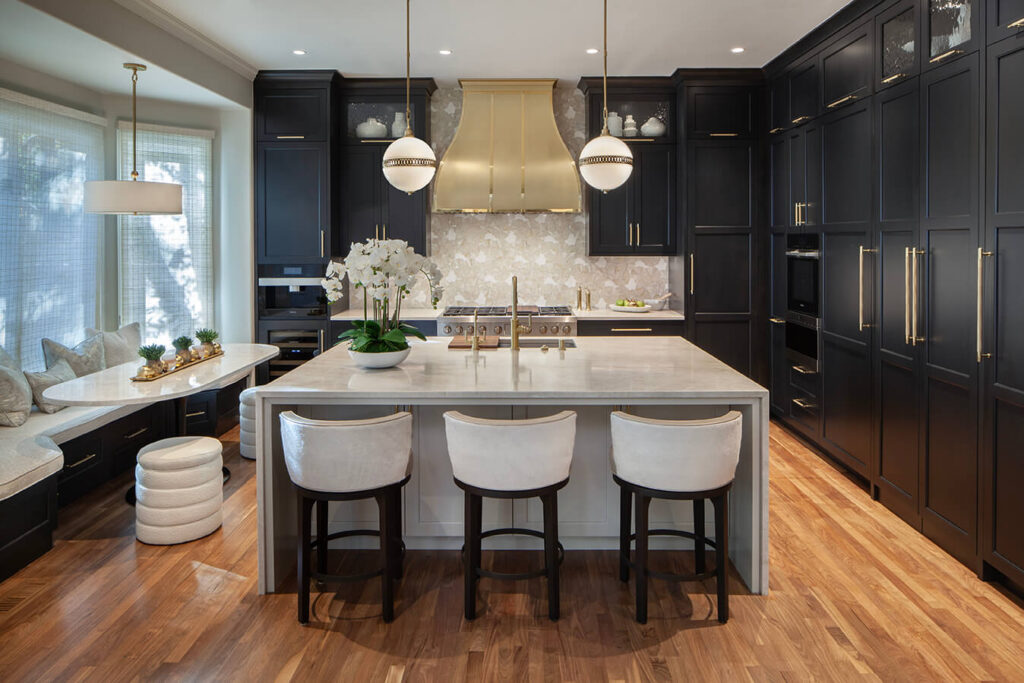
Ergonomics can make or break the experience of cooking at home. Proper aisle widths, landing spaces, and door swings prevent bottlenecks and reduce fatigue. Use the following dimensions as a starting point, then tailor to your household needs and building codes.
Work aisles: Aim for 42–48 inches where the primary cook stands. If you enjoy cooking alongside family members or are sharing kitchen spaces, plan for 48 inches for multiple cooks.
- Walkways (non-work aisles): 36 inches minimum to pass comfortably.
- Island-to-perimeter clearance: Target 42 inches for smooth circulation and appliance doors.
- Landing zones: Offer safe touchdown space: 12–15 inches on each side of the cooktop; 15 inches near ovens/microwaves and by the refrigerator.
- Seating overhang: 12–15 inches for stools, with ~24 inches of width per seat.
Choose the Layout That Fits Your Architecture
Every home has a natural rhythm. Instead of forcing a trend, choose a configuration that complements your envelope, windows, and circulation paths. The right plan should feel inevitable, like it was always a part of the existing structure.
- Galley: Ultra-efficient, with storage on two parallel runs and minimal corners. Add a pass-through or window for openness.
- L-shaped: Flexible and airy, pairs well with a modest island if space allows.
- U-shaped: Wraparound counters for serious cooks. Zoning is straightforward, with optional peninsula seating.
- One-wall: Clean and modern in lofts or condos. Add a substantial island to recover prep and storage.
- Peninsula: Ideal when you want definition without closing off adjacent living spaces.
Sink and Appliance Placement
Appliance placement influences safety, speed, and the joy of cooking. Anchor the plan with the sink, then build out supporting roles so tasks line up logically and traffic through your kitchen doesn’t interrupt paths.
- Sink: Position near a view or social sightline. Keep the dishwasher and pull-out trash within a step.
- Refrigerator: Place at the zone edge so snack-seekers can grab and go without interrupting prep station areas.
- Cooktop/Range: Centered in the cooking zone with heat-resistant landings on both sides. Size ventilation (range hoods, windows) to the appliance.
- Wall ovens & microwave: Mount at an ergonomic height. A microwave drawer frees counter space and improves safety.
- Secondary/prep sink: On larger islands, it enables two people to work comfortably at once.
Design the Island as a Multi-Tool
A great island supports how you actually live — weekday meals, weekend entertaining, and everything in between. Treat it like a Swiss Army knife that can prep, seat, store, and serve without crowding the room.
- Proportion and placement: Keep clearances generous on all sides; scale the island to the room to protect flow.
- Function-first top: If this is your primary prep zone, avoid major interruptions; add outlets if it doubles as a serving or homework hub.
- Storage strategy: Deep drawers for cookware, tray dividers for sheets, and an appliance garage to tame small appliances.
- Seating plan: Stools belong on the non-working side; confirm knee space and walkway clearance behind seats.
Storage Solutions That Eliminate Friction
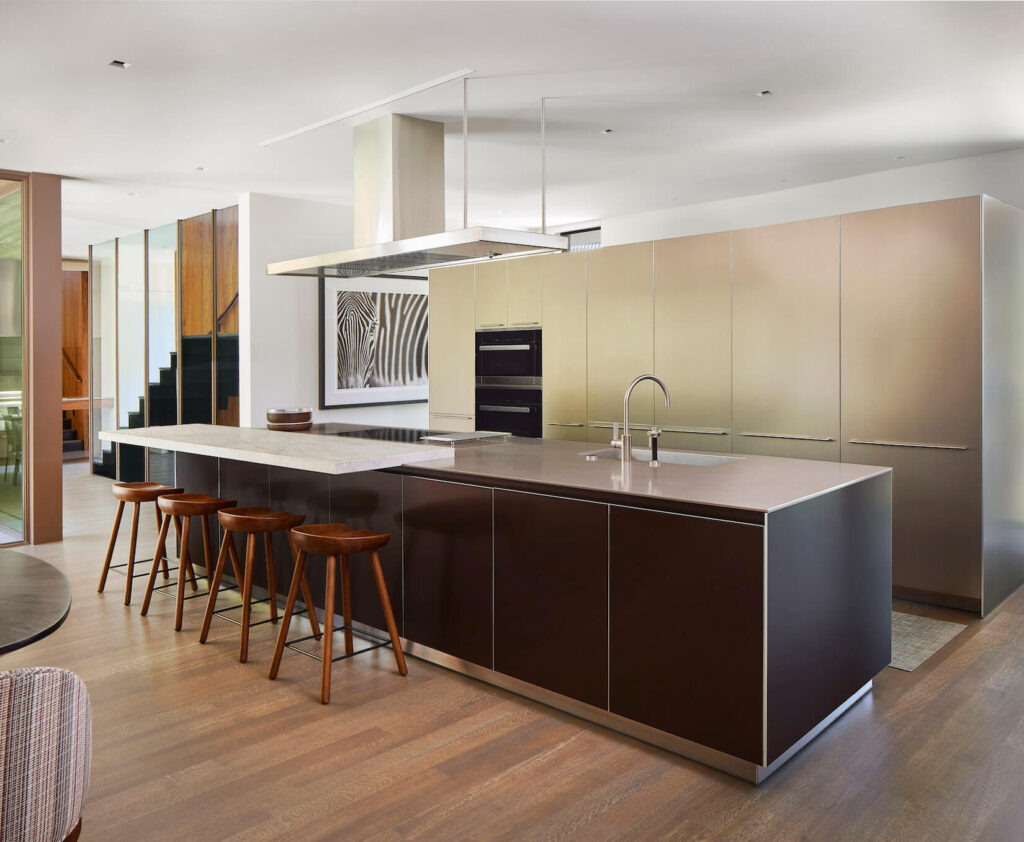
The most efficient kitchens make everything easy to see and reach. Thoughtful storage reduces visual clutter and speeds up every task, from weeknight dinners to holiday baking.
- Drawers over doors: Full-extension drawers outperform deep base cabinets for pots, pans, and dinnerware.
- Pull-outs: Spice pull-outs, tall pantry pull-outs, and corner solutions (LeMans, carousel) conquer hard-to-reach areas.
- Vertical dividers: Keep sheet pans, cutting boards, and platters upright and accessible.
- Trash & recycling centers: Place at the prep and clean-up zones. Add a second, smaller pull-out near a beverage station.
- Toe-kick storage: Smart for trays or rarely used items in tight footprints.
- Dedicated drop zone: A shallow drawer by the entry corrales mail, keys, and chargers.
Lighting Layers That Elevate Form and Function
Lighting is as critical as cabinetry. Layer ambient, task, and accent sources to create a room that shifts gracefully from bright, efficient prep to warm, inviting evenings.
- Ambient: Recessed or ceiling fixtures for overall illumination.
- Task: Under-cabinet lighting eliminates shadows on counters; add focused light above the sink and range.
- Accent: Interior cabinet lighting, toe-kick LEDs, and pendants over the island add depth and mood.
- Dimmers: Essential for dialing light levels throughout the day.
Surfaces and Materials for Real Life Situations
Finish choices should look beautiful on day one and stand up to years of use. Favor durable, low-maintenance materials where you work hardest, and introduce texture and character where it counts visually.
- Countertops: Quartz and ultra-compact surfaces excel at durability; natural stone offers unique movement and patina.
- Cabinetry: Frameless construction maximizes space; soft-close hardware and interior organizers enhance daily function.
- Backsplash: Extend the counter material for easy care or use tile for texture—protect high-splash areas especially.
- Flooring: Engineered wood, large-format porcelain, or luxury vinyl balance resilience with comfort.
Plan for Smart Integrations and Future-Proofing
Modern kitchens are increasingly tech-forward, so plan electrical and charging with the intention to keep counters clear and appliances running safely and efficiently. Place outlets exactly where you’ll use them — at the coffee station, on the island for a mixer, inside appliance garages, and under cabinets for discreet task power.
Build in smart upgrades such as USB-C ports, charging drawers, and integrated power in high-use zones to support devices without clutter. Prioritize safety as you go: specify GFCI/AFCI protection in wet areas, vent hoods to the exterior, and maintain mindful clearances around open flames and heat sources.
How to Prioritize When Space (or Budget) Is Tight
If you can’t tackle everything at once, sequence decisions so performance comes first and decorative layers can follow. Start by protecting the flow. Aisle widths and clearances matter more than any single finish. Next, invest in storage that works hard daily, such as full-extension drawers, thoughtful pull-outs, and a well-organized pantry, which will outperform specialty gadgets.
Elevate the space with layered lighting, which makes every surface look better and work smarter. Phase in extras over time, like appliance upgrades, interior organizers, and accent lighting, to add later on or if your budget allows.
Bring Your Vision to Life with Kitchen Distributors
An efficient kitchen layout is never one-size-fits-all — it’s a thoughtful response to your architecture, routines, and the way you love to gather. At Kitchen Distributors, our team takes a collaborative, detail-driven approach to planning layouts that balance performance and beauty. From zoning and appliance placement to storage engineering and lighting design, we craft kitchens that feel intuitive, inviting, and distinctly yours.
Ready to reimagine how your kitchen works? Contact Kitchen Distributors to start a conversation about your space. Whether you’re building new or remodeling an existing home, we’ll guide you from concept through installation with bespoke cabinetry, curated materials, and meticulous project coordination. Reach out today to schedule a consultation and take the first step toward a kitchen that looks exquisite and turns your design visions into a reality.

Kitchen Distributors is an award-winning kitchen design team that turns your dream kitchen in Denver, CO to a reality. From concept to full-service construction, we take care of all the details of your future kitchen design, so you can focus on what matters.