
The modern home has entered a new era of refinement, where kitchens are no longer conceived as isolated workspaces but as integral extensions of the architecture itself. The rise of the luxury minimalist kitchen reflects a broader shift toward interiors that feel composed, intentional, and visually effortless. Today’s most sophisticated kitchen environments prioritize clean sightlines, concealed functionality, and material continuity, allowing the kitchen to recede gracefully into the surrounding living space while still delivering exceptional performance.
As luxury homes continue to embrace open living, kitchens are becoming increasingly architectural in expression. Architectural Digest identified integrated appliances and bespoke, seamless layouts among the leading kitchen trends shaping 2025, reflecting growing demand for spaces that feel calm, cohesive, and visually understated.
What Defines an Invisible Kitchen?
An invisible kitchen is designed to blend harmoniously into the architecture of the home. Cabinetry aligns flush with the surrounding walls. Appliances disappear behind integrated panels. Storage remains concealed behind minimalist surfaces with little or no visible hardware. Every detail contributes to a sense of calm continuity.
The goal is not to eliminate the kitchen’s function, but to soften its visual presence. The space should remain highly functional while appearing refined, uncluttered, and deeply connected to the surrounding environment.
This design philosophy is particularly compelling in luxury homes where entertaining, gathering, and daily living flow together. Instead of separating the kitchen from adjacent living areas, the invisible kitchen creates visual cohesion throughout the entire interior.
The Shift Toward Architectural Living
Luxury design increasingly favors interiors that feel curated rather than decorated. Homeowners are seeking spaces that evoke tranquility, permanence, and understated sophistication. In this context, the kitchen becomes part of a larger architectural composition rather than a standalone focal point.
Minimalist architectural kitchens rely on proportion, symmetry, and material harmony, while long uninterrupted surfaces create visual quietness. Integrated lighting enhances depth without distraction, while carefully selected materials introduce warmth and texture while maintaining restraint.
This approach aligns naturally with contemporary architecture, where clean lines and open spaces allow the home itself to become the statement. The invisible kitchen supports this vision by removing unnecessary visual interruption.
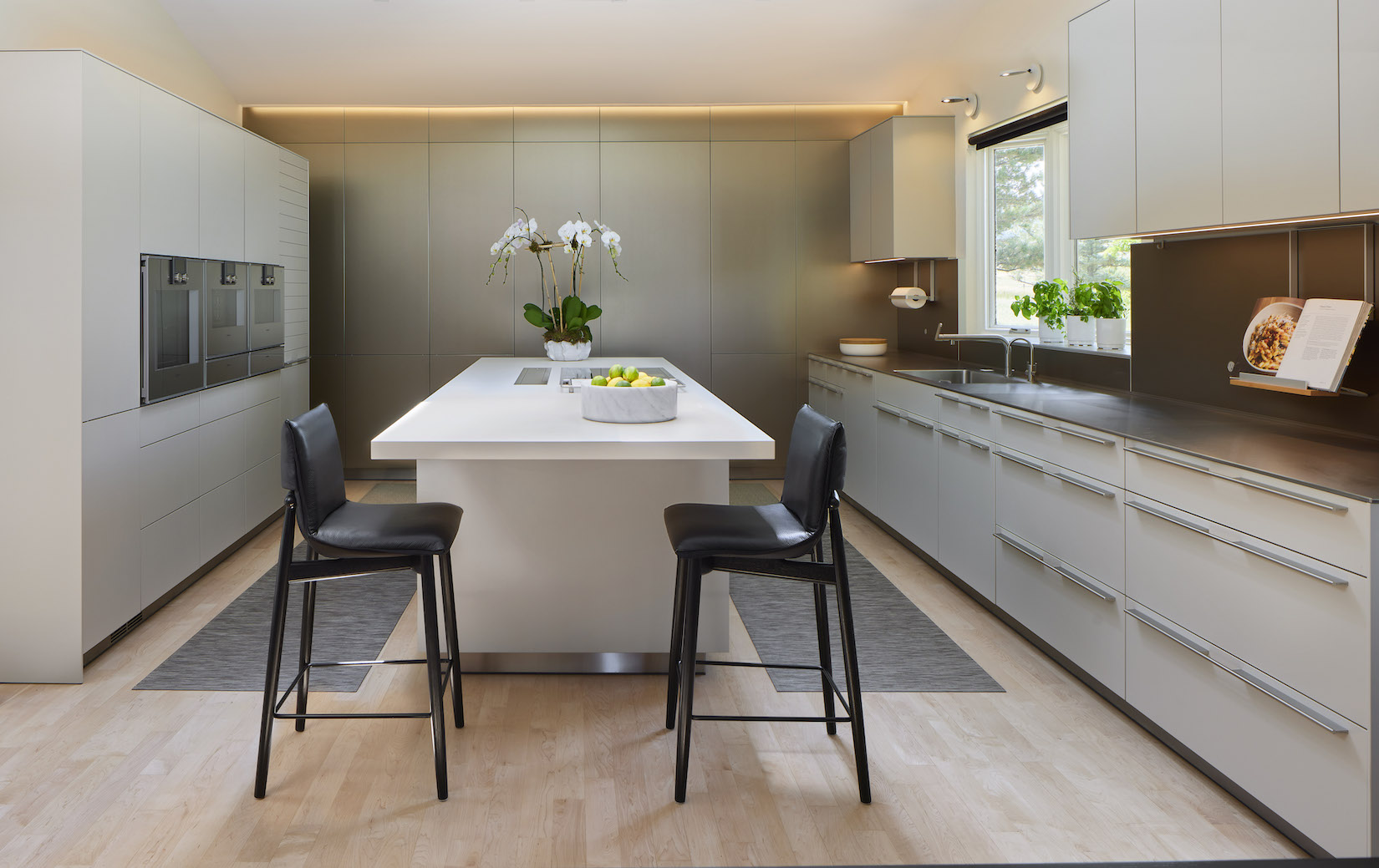
Image from KD Gallery: Sleek Sophistication
Concealed Storage Creates Visual Calm
One of the defining features of the invisible kitchen is concealed storage solutions. Everyday items that traditionally create visual clutter are intentionally hidden behind beautifully integrated cabinetry systems.
Small appliances disappear into appliance garages, refrigeration blends seamlessly into tall cabinetry walls, and deep drawers replace upper cabinets in many layouts, preserving open sightlines and creating a more expansive atmosphere. The end result is a kitchen environment that feels serene and highly organized. These surfaces remain clean and uninterrupted, contributing to a more luxurious and composed experience.
Storage in these kitchens is designed with remarkable intentionality. Interior organization systems, integrated dividers, hidden pantries, and custom drawer inserts ensure that functionality remains effortless despite the minimalist aesthetic.
Integrated Appliances and Seamless Functionality
Luxury invisible kitchens rely heavily on fully integrated appliances. Refrigerators, dishwashers, wine storage, and ventilation systems are concealed behind custom panels that align perfectly with surrounding cabinetry. This integration allows the kitchen to maintain a unified visual language. Rather than introducing multiple finishes and competing appliance aesthetics, the design feels cohesive and architectural.
Minimalist induction cooktops further support this concept. When not in use, they visually disappear into the countertop surface. Integrated ventilation systems reduce overhead visual bulk and preserve clean ceiling lines.
Even lighting becomes more discreet. Recessed fixtures, concealed LED channels, and integrated cabinet illumination provide functionality while maintaining a soft and understated atmosphere.
Material Continuity as a Design Strategy
In invisible kitchen design, material selection plays a central role in creating visual harmony. Rather than relying on contrast and decor, designers often use consistent finishes and textures to unify the space.
Wood veneer cabinetry may extend seamlessly into surrounding living areas. Stone surfaces continue uninterrupted from kitchen countertops into feature walls or architectural elements. Matte finishes absorb light softly, enhancing the feeling of calm sophistication.
Natural materials are particularly important in luxury minimalist spaces because they introduce depth without visual excess. Rich walnut, smoked oak, brushed metal accents, natural quartzite, and honed stone surfaces create warmth and refinement while preserving simplicity.
Open Living and the Disappearing Kitchen
The invisible kitchen is especially suited to open-concept homes. In these environments, the kitchen remains visible from living rooms, dining areas, and entertaining spaces throughout the day.
A highly visual traditional kitchen can sometimes dominate the atmosphere of the home. The invisible kitchen takes a more restrained approach, allowing architecture, furnishings, and natural light to coexist more harmoniously. This subtle integration is particularly valuable in luxury residences where entertaining plays a significant role. Guests experience a space that feels elegant and composed, even during active meal preparation.
Precision Craftsmanship Defines Luxury
Achieving a truly seamless kitchen requires exceptional craftsmanship. Precise alignment, refined detailing, and advanced engineering are essential to maintaining the illusion of simplicity.
Flush cabinetry installation demands meticulous planning. Integrated hardware systems must operate flawlessly while remaining visually discreet and material transitions require careful calibration to ensure continuity across surfaces.
In luxury kitchen design, simplicity often requires more expertise, not less. Every reveal, joint, and finish contributes to the final experience. Small inconsistencies become more noticeable within minimalist environments, making craftsmanship one of the most critical components of invisible kitchen design. High-end European cabinetry manufacturers have spent decades refining engineering techniques that allow kitchens to achieve this level of architectural integration.
Technology That Supports Invisible Design
Modern invisible kitchens incorporate advanced technology while maintaining visual restraint. Smart appliances, automated lighting systems, integrated charging stations, and touch-to-open cabinetry allow functionality to remain sophisticated without compromising aesthetics.
Technology in these spaces is designed to feel intuitive rather than intrusive. Appliances should respond quietly and efficiently while lighting adapts to mood and activity. Storage systems maximize accessibility while preserving simplicity, all providing a cohesive flow to your kitchen space.
This balance between innovation and minimalism reflects the broader philosophy of contemporary luxury living. The most refined spaces prioritize ease, comfort, and permanence over excess.
Why Invisible Kitchens Continue to Define Luxury Design
The enduring appeal of the invisible kitchen lies in its ability to create emotional calm within the home. These spaces feel intentional, balanced, and deeply connected to modern architectural living.
As homeowners increasingly prioritize wellness, simplicity, and timelessness, kitchens that reduce visual noise have become highly desirable. The invisible kitchen supports a lifestyle centered around clarity, functionality, and enduring sophistication.
Rather than competing for attention, these kitchens elevate the overall experience of the home through subtlety and precision. Their beauty emerges gradually through proportion, craftsmanship, and thoughtful restraint.
Our Perspective on Invisible Kitchen Design
At Kitchen Distributors, we believe the invisible kitchen represents one of the most compelling evolutions in modern luxury interiors. Our approach centers on creating environments that feel architecturally integrated, emotionally calming, and exceptionally functional.
We work closely with homeowners, architects, and interior designers to develop kitchens that align seamlessly with the surrounding residence. From integrated cabinetry systems to refined material palettes and concealed functionality, every detail is considered through the lens of longevity and intentional living.
Our philosophy emphasizes precision craftsmanship, timeless aesthetics, and the belief that luxury should feel effortless within the home.
Visit Our Showroom for Design Inspiration
We invite you to visit the Kitchen Distributors showroom to explore how invisible kitchen design can transform the experience of modern living. Our curated showroom environments showcase refined cabinetry systems, integrated appliances, and sophisticated material applications that blend seamlessly into contemporary architecture.
Whether you are designing a new residence or reimagining an existing home, our team is here to guide you through a personalized design consultation focused on creating a kitchen that feels cohesive, elevated, and enduring. Discover inspiration, craftsmanship, and thoughtful living solutions with Kitchen Distributors.

Kitchen Distributors is an award-winning kitchen design team that turns your dream kitchen in Denver, CO to a reality. From concept to full-service construction, we take care of all the details of your future kitchen design, so you can focus on what matters.